
Independent survey
Timber Surveys in Swansea & South Wales
An independent inspection of accessible structural and joinery timbers. We don't sell timber treatments, so our recommendations are based only on what the evidence shows.
What a timber survey can look at
- Wet rot in floors, skirtings, window frames and joinery
- Suspected dry rot
- Wood-boring insect damage and exit holes
- Excess moisture in timbers
- Softened, cracked or decayed timber
- Timber condition in accessible roof or floor voids
Moisture is usually part of the story
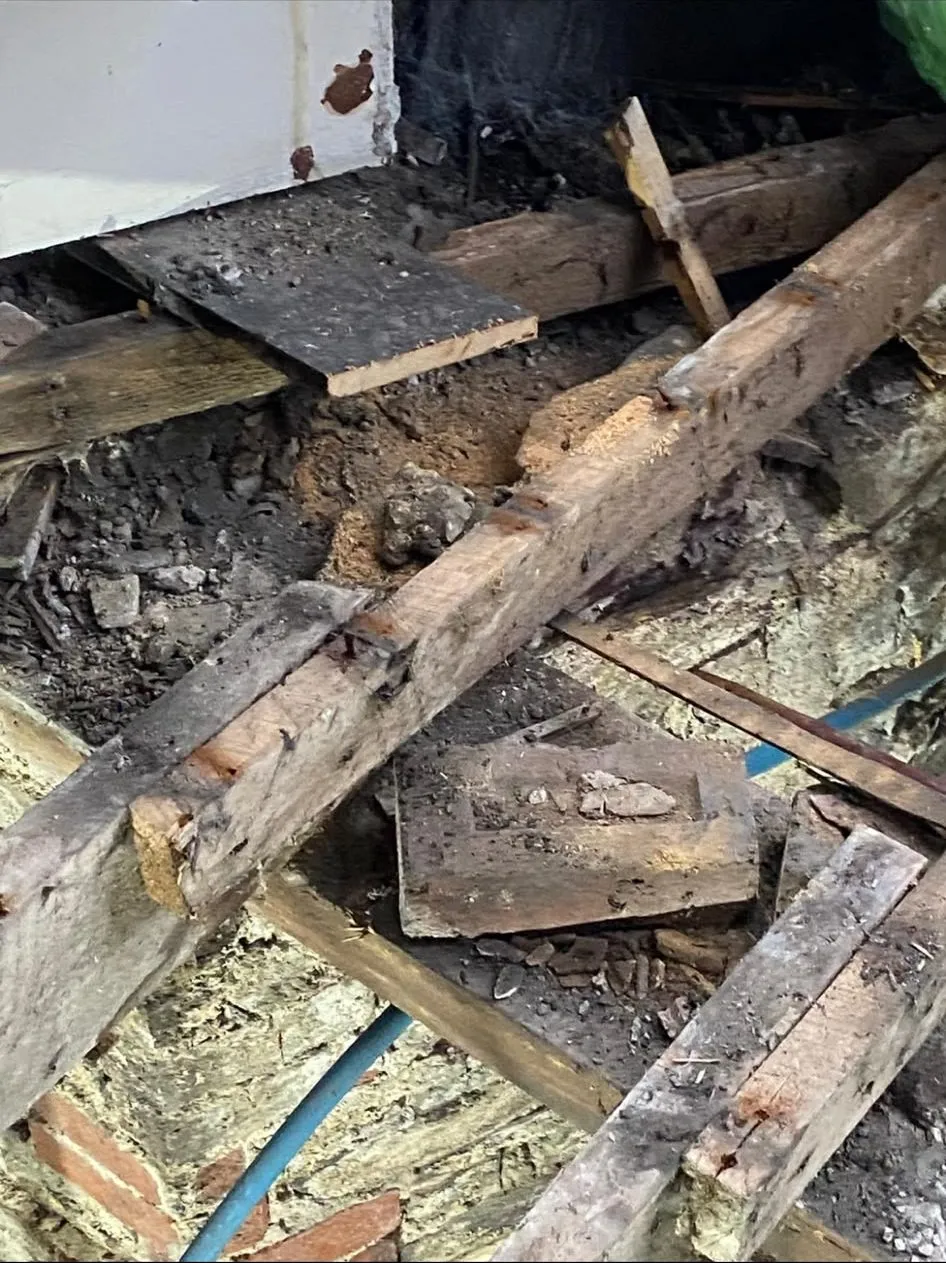
Most timber decay is linked to moisture. Finding and explaining the source of that moisture is often as important as identifying the decay itself, because treating timber without addressing the cause rarely resolves the problem.
Our inspection concentrates on accessible timbers and the conditions around them. Where timbers are concealed, we'll explain what further investigation may be needed.
About wood-boring insects
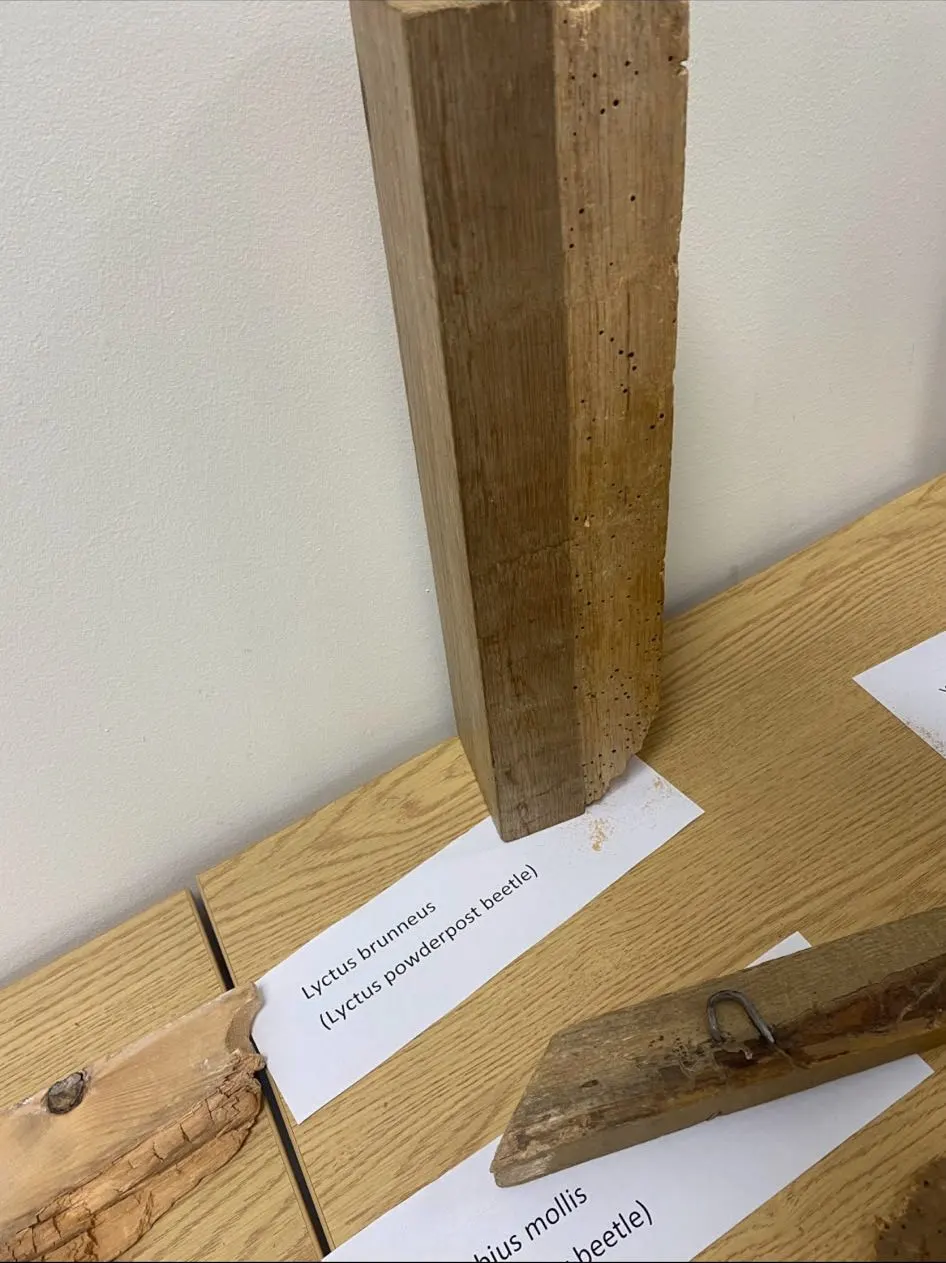
Exit holes in timber are a common reason for concern, but holes alone don't automatically mean an active infestation. Damage may be historic, and the presence of holes doesn't by itself tell you whether insects are still active or whether treatment is needed.
Different insects leave different signs, prefer different timbers and are associated with different conditions. Identifying what is present, and whether there is evidence of current activity, helps decide what — if anything — should be done next.
- Size and shape of exit holes
- Presence or absence of fresh bore dust (frass)
- Type and condition of the affected timber
- Moisture content and surrounding conditions
Your written report
After the inspection you'll receive a professional written report explaining:
- Observed findings
- Likely causes
- Relevant contributing factors
- Recommended next steps
Inspections cover accessible areas and are non-invasive unless otherwise agreed. Concealed defects may not be identifiable without further investigation.
Questions
Related surveys
Damp Surveys
Investigating damp patches, persistent moisture and musty conditions to identify likely causes.
Find out moreDamp & Timber Surveys
A combined investigation where moisture problems may be affecting structural or joinery timbers.
Find out moreCondensation & Mould Surveys
Investigating humidity, ventilation, temperature and cold surfaces behind recurring condensation and mould.
Find out moreDiscuss your property
Tell us what you've noticed and where the property is. We'll explain whether a survey is appropriate and what it would involve.